
Vol. 50 No. especial 2 maio (2026): A look at collective health and the Brazilian Unified Health System (SUS) in the Cerrado territories
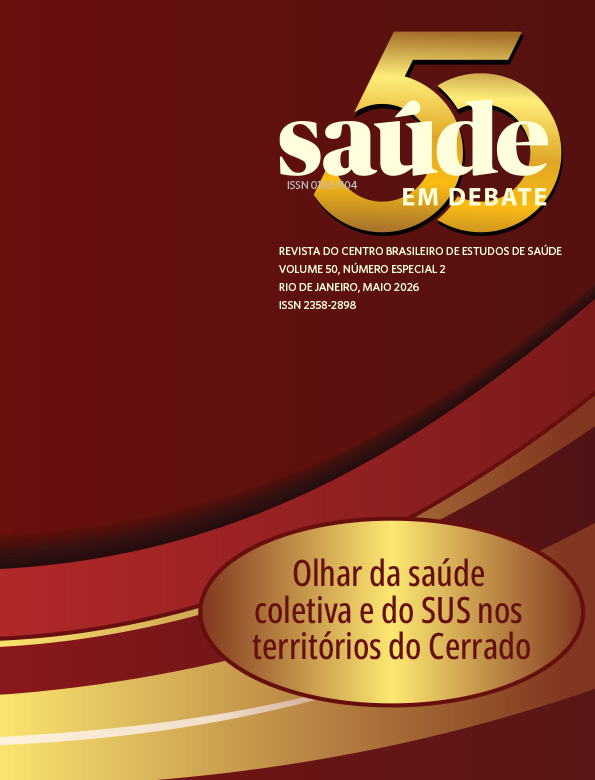
The second special thematic edition of 2026 of Saúde em Debate (Health in Debate) brings to light ‘A look at collective health and the Brazilian Unified Health System (SUS) in the Cerrado territories’. The scientific editors “believed that this work reveals a critical knowledge gap in the Cerrado, especially regarding the articulation between sociobiodiversity and health, which demands urgency in formulating public policies that promote the protection and cultural appreciation of the biome. It is imperative to re-signify the effective right to health and access to SUS […] in this work, the reader will find arguments and evidence for the contribution of a systemic approach to health and the environment in public policies oriented to the emancipatory and sustainable transformation of the Cerrado”.
It brings together articles on the following topics: Medicinal plants in a municipality in the Vale do Jequitinhonha, Minas Gerais; Therapeutic itinerary and access to health in rural communities of the Cerrado biome of Goiás; The self-care practices of raizeiros and raizeiras in the Chapada do Araripe as resistance to neo-extractivism; Indigenous health in the Cerrado: The Inỹ Karajá in focus; Food and nutritional sovereignty and security in the Tirecatinga Indigenous Land, Sapezal, Mato Grosso; air pollution from biomass burning and wildfires in the Legal Amazon and Northern Cerrado regions; Sociobiodiversity, collective health, and innovation in the Cerrado biome; Pesticides in the Cerrado; Ecocide, capitalism, and quilombola resistance in Cocalinho, Maranhão; The Cerrado and public policies in environment and health for the protection of sociobiodiversity; Economic development in the Cerrado: Implications for the environment and health; Human rights violations and health impacts: Violence against the peoples of the Cerrado; Repercussions of Brazilian livestock farming on human and environmental health; Health geography: Territories in search of professionals who know how to work with their feet on the ground; Agribusiness and health in the Cerrado and Amazon; Scientometric analysis of Dipteryx alata Vogel (Fabaceae); Cerrado, sociobiodiversity and health; Socio-environmental and health impacts caused by flooding and heat waves in Brazil; The promotion of intercultural territories: Educational itineraries in the Cerrado; Tick biodiversity in the Cerrado biome and implications for One Health; Cerrado traditional herbalists at university and a training experience for the Unified Health System; Cerrado: Scientific communication in health and environment through games and art; Uncovering the resistance and struggles of vulnerable territories in the Cerrado biome.
Published:
2026-05-27
Full Issue
Presentation
Original Article
Essay
Review
Opinion Article
Experience report
Reviewers who served in this issue
- Alejando lasso
- Ana Cláudia de Araújo Teixeira
- Ana Lucia de Moura Pontes
- Anderson C. R. Brito
- André Luiz da Silva Lima
- André Luiz Dutra Fenner
- Bianca Coelho
- Cristiane Coradin
- Cristiane Lemos
- Daniela de Melo e Silva
- Deivdson Brito Gatto
- Gabriela Rieveres Borges de Andrade
- Guilherme Franco Netto
- Iane de Oliveira Pires Porto
- Ingrid Fonseca Casazza
- João Felippe Cury
- Jorge Mesquita Huet Machado
- José Carlos da Silva
- José Erivaldo Gonçalves
- José Nunes da Silva
- Lenaura de Vasconcelos Costa Lobato
- Lia Giraldo da Silva Augusto
- Luciana Alleluia
- Lucineia Miranda de Freitas
- Márcia Mizusaki
- Mariana Nepomuceno
- Mariana Olívia
- Paulette Cavalcanti de Albuquerque
- Peter Herman May
- Rafael Afonso da Silva
- Renata Maria Pereira de Freitas
- Sandra Magalhães Fraga
- Thays Alves
- Valéria Gonçalves da Vinha
- Vera Dantas
- Ximena Pamela Claudia Díaz Bermúdez
